Tank Container Production
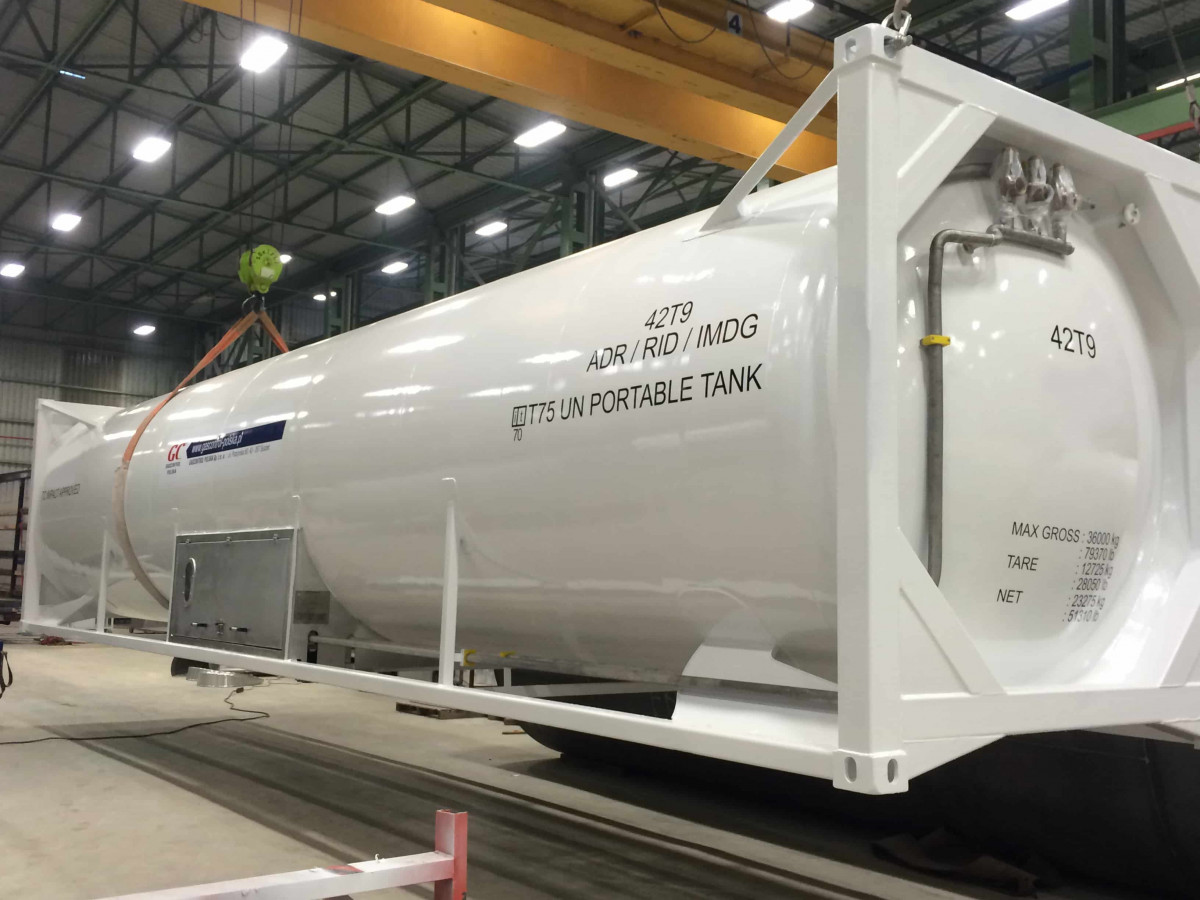
A tank container is a cargo unit designed for transporting both liquid and gaseous goods. The structure consists of a metal tank enclosed in a durable frame. Containers differ in types according to the category of goods they are intended to transport. The cargo unit can be used on almost all types of transport — road, rail, and sea.
Tank Container Manufacturers
The global leader among cargo container manufacturers is the Chinese industrial company CIMC — its market share reaches 60%. The corporation operates offices and production facilities in many countries around the world.
The production workshops are equipped with modern machinery, ensuring high efficiency, functionality, and compliance of the company’s products with international standards.
The largest tank container manufacturers:
- CIMC (China);
- Van Hool (Belgium);
- Welfit Oddy (South Africa);
- NTtank (China);
- Singamas (China).
Materials and Assembly
The process of manufacturing and assembling a tank container must comply with a set of requirements that vary depending on the purpose of the cargo unit.
The tank (the vessel) is made from stainless or structural steel (alloys resistant to aggressive environments). For transporting acids, the tank must have a special internal coating.
The tank dimensions are strictly defined by the ISO international classification. Due to the wide variety of transported goods (from chemicals in liquid form to food products), tank containers are usually manufactured to order.
Assembly is carried out at specialized facilities equipped with the necessary systems to ensure proper assembly and subsequent testing.
Tank Container Components
The design of a tank container consists of several main elements:
- the tank — the vessel;
- the external frame — the structural framework;
- auxiliary equipment.
The frame not only ensures the reliability and durability of the entire structure but also provides multimodality: it allows the unit to be secured and used across various modes of transport.
Specialized containers are equipped with discharge fittings that prevent cargo leakage. The system allows unloading under pressure or by gravity. Additional equipment may include thermal insulation and a steam heating system to simplify unloading at low temperatures.
Additional components for tank containers:
- thermometer;
- fittings;
- shut-off devices;
- rubber seals;
- specialized marine container hinges;
- ventilation grilles.
Purpose of Tank Containers
Tank containers are used for transporting:
- various liquids;
- liquefied gases;
- powdered products such as soda ash or fertilizers;
- liquid food products.
Containers are suitable for transporting liquid chemicals, petroleum products, oils, and paints. The list of food products transported in tank containers includes: liquids containing alcohol, oils and additives (food-grade), liquid concentrates (juices), and milk.
This type of transport unit is suitable for intermodal shipments because the container can be easily transferred from one vehicle to another along with its contents.
The classification of cargo tanks is represented by a system of T-codes ranging from 1 to 75. The T11 model is considered the most common universal tank type in Europe.
Tank Container Market
You can buy a tank container either new or used. Using tank containers in large-scale logistics provides several advantages — the tanks are reliable, safe, durable, and cost-efficient. They can be stored both empty and loaded.
In 2020, the tank container market experienced a slowdown due to a decline in business activity caused by global restrictions. However, despite this, tank containers continue to expand into logistics niches, and the market is actively developing, offering tank container rental to companies for which purchasing such expensive equipment may be impractical.
In Ukraine, tank containers began to be widely used in 2013. Today, the number of tank containers in the country has increased, but the total volume of transportation has decreased compared to previous periods due to a drop in exports. According to leading experts, the market remains strong, offering reasonable prices for new equipment and increased competitiveness in the logistics industry.
Our Partners
Today, our company services a number of large linear companies operating in Ukraine. Such as:































Want to stay informed?
Subscribe to our newsletter, and we'll notify you about new promotions, special conditions for partners and new clients, and market changes.